Saturday, March 2, 2013

Roses in my garden


I have had a love/hate relationship with roses over the years. When I first started this garden 25 years ago, I attempted to grow a number of hybrid teas. They proved to be fussy, finicky, black-spotty and very high maintenance. As one after the other kicked the bucket, I thought: No More! But as usual after a good emotional outburst, I decided to check out options other than the hybrid teas. I am happy to report that a number of different types of roses do very well for me and I am in love with each and every one of them.

Let's start with the climbers:


I have 'Blaze' in 3 locations (and some of those have been moved several times!) 'Blaze' is a strong, hardy deep red climbing rose that blooms repeatedly, right through early fall into the first really cold days of November.
Most of mine are in direct sun or they get sun for at least 6 hours a day. The biggest one has long outgrown its trellis so it needed extra wires and support. It's right beside 'New Dawn', another popular climber, so maybe it's the two of them together that keep yanking down the trellis.


This year I think I will really feed them and pamper them more. They already put on a good show but I have seen photos where the flowers absolutely cover the whole plant. That's what I want! And I'll fertilize them to achieve that.


Here's 'New Dawn', a pale pink beauty that compliments 'Blaze' beautifully or stands out as royalty in its own right.


This stunning yellow rose lasted about 4 years in my garden and then died out, I'm not quite sure why.
I had planted 'Lichtkonigen Lucia' to intertwine with my deep purple Clematis 'Jackmanii' but they never did bloom at the same time. I did enjoy it while it was around and may consider replacing it someday.


Rugosa roses bloom only once in the season but are abundant and the most lovely shade of deep pink. They are shrubby and have phenomenally painful thorny stems but require absolutely no maintenance whatsoever, therefore I have several in the yard. They can grow to 6' x 6' so if you plant them, make sure you have the space.


Explorer roses are considered to be Canada's greatest contribution to the world of roses. They are named after famous (and not so famous!) Canadian explorers. The roses are very hardy, disease and mildew resistant and are often repeat bloomers.


At their peak, mine look magnificent against a background of the variegated leaves of red twig dogwood bushes.
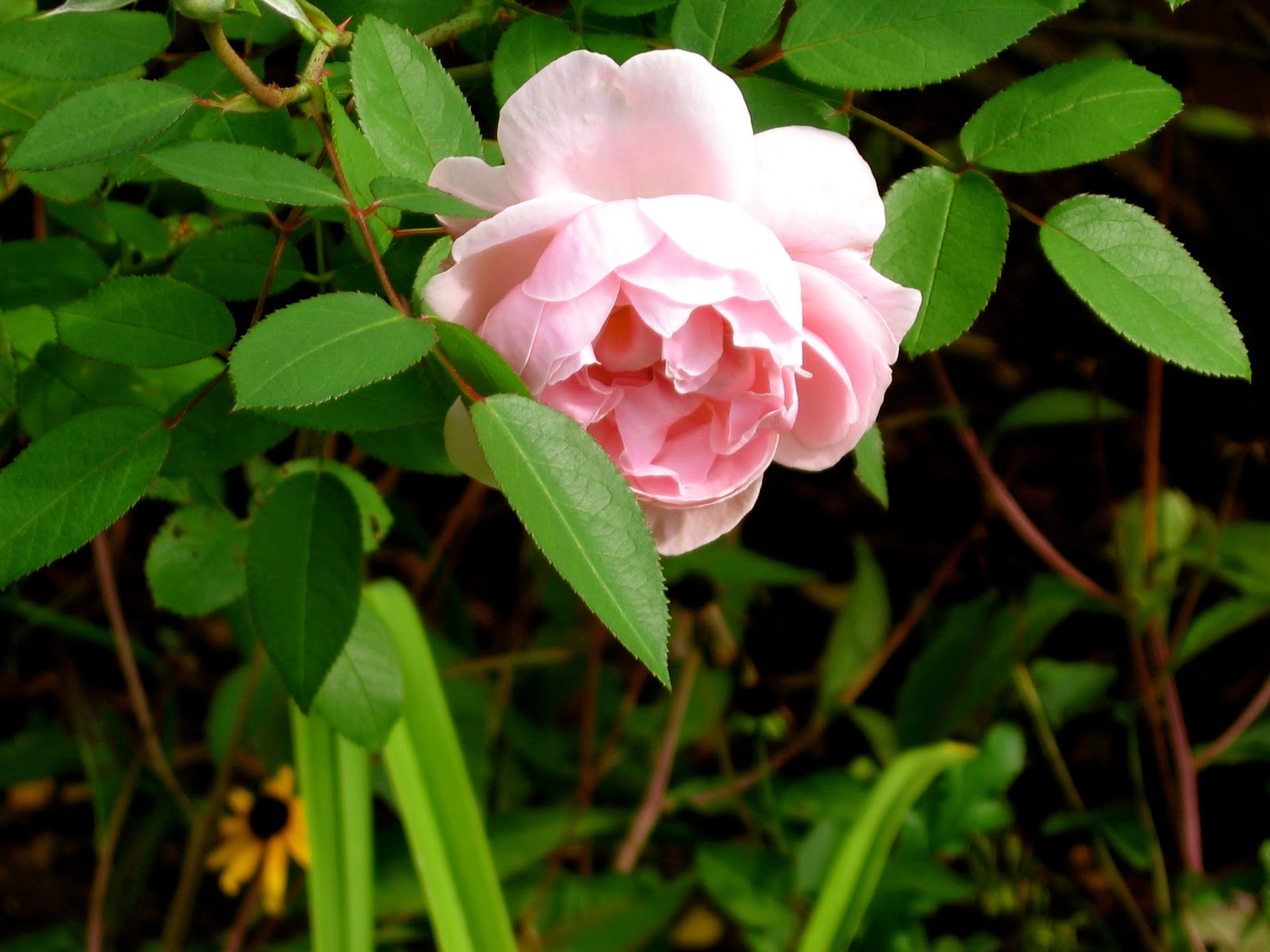

I only have one David Austin rose 'Mary Rose' and it fights the shade of a huge linden tree now. But it blooms so delightfully, stretching out tall in search of the sun. She's a real trooper and I adore her. I bought this plant at the grocery store! (Amazing sometimes where you can get terrific plants!!)


I have a couple of lovely delicate-looking shrub roses called Flower Carpet White beside the peonies near the deck. They grow 3' x 3'. Their buds are a soft apricot shade but they open white. Gorgeous.


I have another white shrub rose that has grown into a monster - at least 8' x 8'! It sort of takes up the middle of a bed but blooms so nicely - single white blossoms blushed with pink once in early July - that I tend to ignore its bullying tendencies.


And last but certainly not least is the polyantha rose 'The Fairy' - a pale pink beauty that blooms profusely in summer and then all over again in late fall. Its buds are tight and deep pink and then it opens into a paler version of the same colour. I have it near some 'Silver King' artemesia and deep green evergreens. It's astonishing and unstoppable.


So if you are considering roses for your garden, remember - there are so many different types that I'm sure one or two "easy" ones will do beautifully for you!


Tuesday, February 19, 2013

Top Perennials Part 6 (of many)


What is it about Black Eyed Susans (Rudbeckia) and Shasta Daisies (Leucanthemum x superbum), that make me so HAPPY?? I don't know but that's the emotion they elicit from me every time I see them growing in my garden. They just look like such happy flowers!


When I first started my perennial beds, I bought a few pots of Black Eyed Susans. I planted them and transplanted them and over the years they have spread a lot. Not a big deal, though - they are very easy to dig out and give away. In the photo above, they are pictured with the annual Cleome.


They look quite delicate when they first start to open up but that's a misconception. They are unbelievably hardy, forming sturdy clumps with strong stems . They were the Perennial Plant of the Year in 1999.
Later even the black "middles" - the seedheads - are interesting if left in the perennial border as seen below, combined with Sedum 'Autumn Joy'. You could also put them into a flower arrangement.


Plant websites and catalogues often say that Rudbeckia is an autumn-blooming flower. Not for me. They tend to appear in late July already and are often gone by early September. They can handle partial shade but do best in full sun. They tolerate just about any type of soil.


Black Eyed Susans pair very well with other garden perennials, including grasses.


Below they line a path. (Please ignore the big weed thistle between the Rudbeckia and the Sedum :)


Black Eyed Susans are an easy care, low maintenance plant that may do well in your garden.


Shasta Daisies are another easy-to-grow flower that seems to be a staple in most perennial borders. Daisies have a yellow eye and white petals.


They are fabulous when massed together but pair well with many other plants.


Here I've got them with a red Daylily.


One large clump of daisies is beside my polyantha rose 'The Fairy'.


I have allowed the wild bellflower (Harebell) to grow in certain areas because I love the colour.
The daisies go well with it.

Daisies of various heights thrive in average or poor soil in Zones 4-8.
Just a small hint: daisies look good in bouquets but they do NOT have a nice fragrance. At all.


Rudbeckia and Shasta Daisies - two more ideas for your garden next summer!


Wednesday, February 13, 2013

Top Perennials Part 5 (of many)

We got a blast of a snowstorm last Friday. Not as bad as New England, but a foot of snow for sure.
That's why it's so much fun to write about and look at photos of flowers while it's still cold and white outside!

Here are 3 more that I have in my garden  - I'm sure you would like to have them too.


This is Bergenia cordifolia. It is a strong, hardy plant for a wide range of Zones 2-9.
It has thick, leather-y leaves that are bright green in spring. They later turn a lovely burgundy
bronze in autumn. In the spring, any unsightly "spent" leaves should be removed.


In late spring magenta pink flowers rise above the shiny leaves on a long tall stalk. They are very effective if planted en masse. They also combine well with Ajuga reptans 'Burgundy Glow'.
Just watch the ajuga: it's a spreader.


Lungwort (Pulmonaria) is a great perennial for regions that have mild winters. In harsher climates, they survive if covered with thick mulch over the winter. They tolerate shade very well and bloom in early spring. Perennials.com suggests cutting the leaves back to 3 inches after the plant blooms. It will rejuvenate the leaves. I presume it wouldn't hurt to fertilize it at this stage either. It prefers a rich soil and does not like to compete with tree roots.

I have several types of Iris in my garden, 2 of which are Bearded Iris and Siberian Iris.


I used to have deep purple Bearded Iris and even a picotee blue striped one but they died out.
Bearded Iris are notorious for dying from iris borer, which makes the thick corms all mushy and soft.
I now have only the yellow one but it is a beauty. They are heavy feeders so fertilize in early spring and in the fall.


Siberian Iris are much easier to grow! They are dainty on tall thin stalks and are beautiful in flower arrangements.


They do well if divided every couple of years and they love fertilizer.


In one area of the garden I combined them with little allium bulbs, Allium moly. The blue-purple looked great with the bright yellow.


The nice thing with both Iris is that even when the flowers fade, the long grass-like stalks still add texture to the border.

Friday, February 8, 2013

Top Perennials Part 4 (of many)


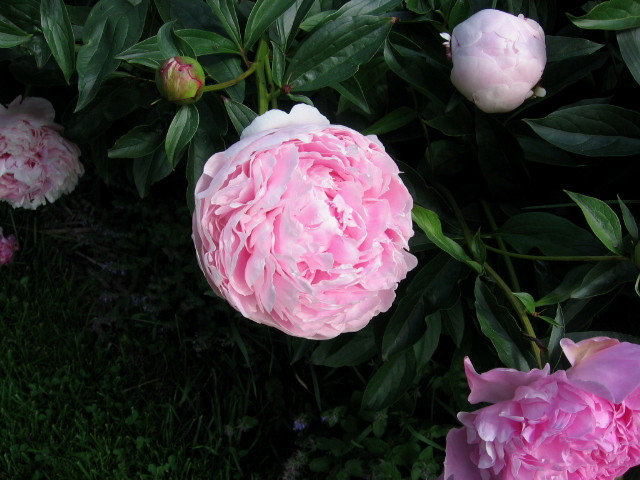
Peonies.
Gorgeous showsy, blowsy peonies.
When I first saw peonies as a teenager, I mistook them for roses.
You either love peonies or you don't.
I adore them.


When we first moved here 25 years ago, a friend's Dad brought me my first peonies along with other wonderful garden donations. He told me not to plant the peonies too deep and to give them support from heavy rain.
I have moved them several times and have supplemented the original 3 or 4 with many others. But my favourites of the ones he gave me are the deepest fuschia - I have never seen such a colour in anyone else's garden. He passed away long ago and I doubt he ever knew the names of the ones he gave me. Therefore I am sorry - I cannot tell you the names either.


So I just take care of them, fertilize them each year, chop out pieces for friends who ask and wire them up, to protect against wind and rain.


My latest location for them is all around the deck. Some years they barely reach the top of the deck - other years they rise a foot above the edge.


They get full sun all day so perhaps that's why they are so "happy".


Canadian Gardening magazine says: "Peonies are large, plentiful and easy to grow, many have sweetly fragrant flowers and are deer-resistant, drought-resistant and cast-iron hardy".
So true!


Why do peonies attract ants?
They don't actually help a peony open up (that's a myth). Ants are just attracted to the nectar from the peony buds as they open. To avoid bringing a lot of ants into the house when you cut the peonies for a vase, just dunk them upside down in a bucketful of water for 5 minutes after cutting. The ants will float out. Give the flowers a shake, bring them in and enjoy!


Peonies are best divided and re-planted in the fall. They love rich soil but also do very well in clay. They can take a bit of shade but do best in full sun.


Monday, February 4, 2013

Top Perennials Part 3 (of many)


The next two flowers I'd like to present constitute good "fillers". Neither one is exceptional by itself but within a border, they both add an interesting element and blend well with the showy ones.

Yellow Loosestrife (Lysimachia punctata) is a tall plant, growing 2-3 feet tall. Its flowers grow in elegant flowering spikes. It's great in a perennial border or beside a water feature.
It is in no way related to Purple Loosestrife Lythrum salicaria, an invasive plant that everyone attempted to eradicate in the 90's.


I have 2 areas where Yellow Loosestrife has spread nicely. Above you see it with red Serviceberries but I also like it with the annual bright red Maltese Cross (Lychnis chalcedonica)


Yellow Loosestrife is best left in the border. I have tried cutting it for bouquets but is short lived, lasting only a day or two.


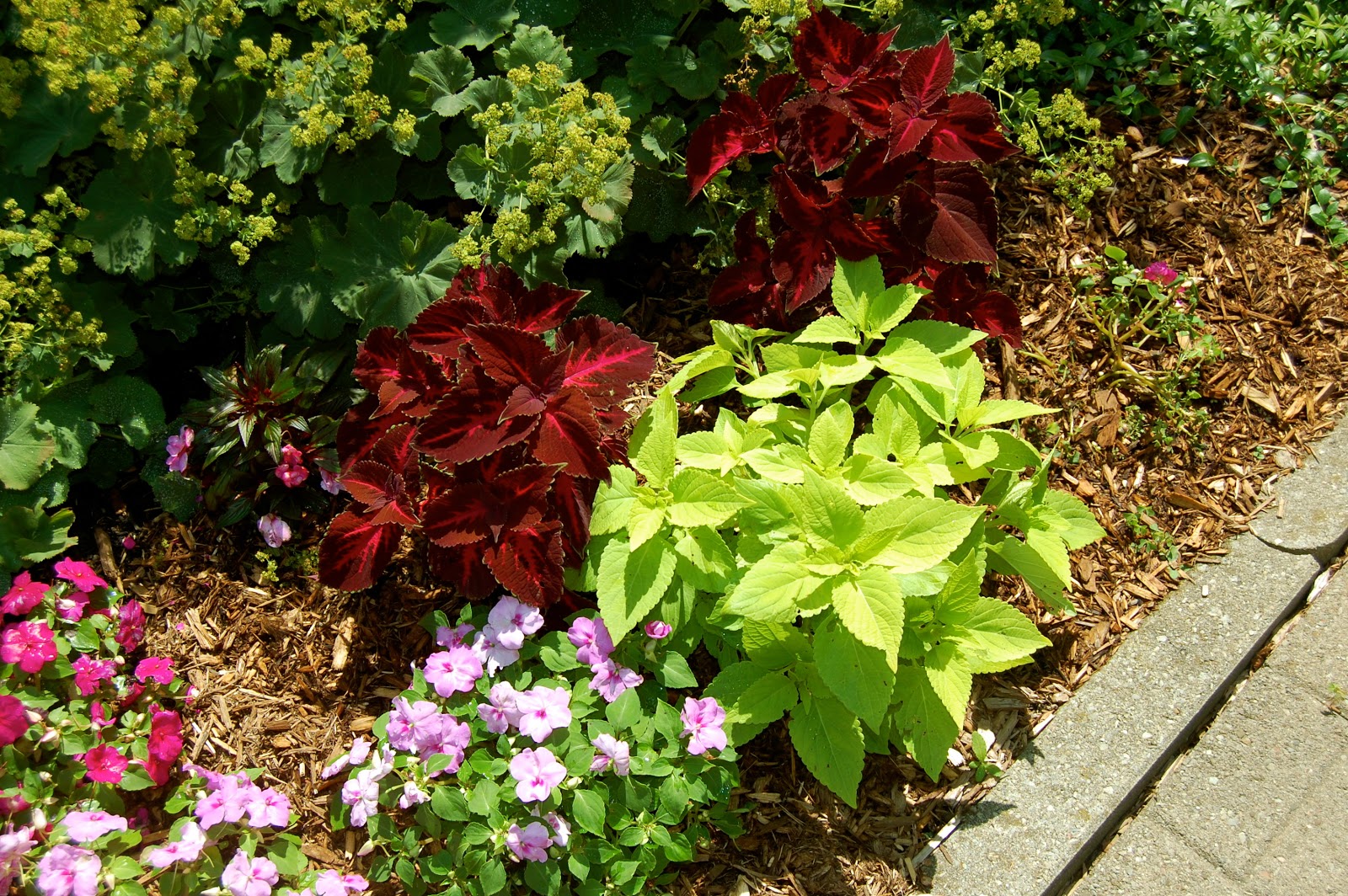
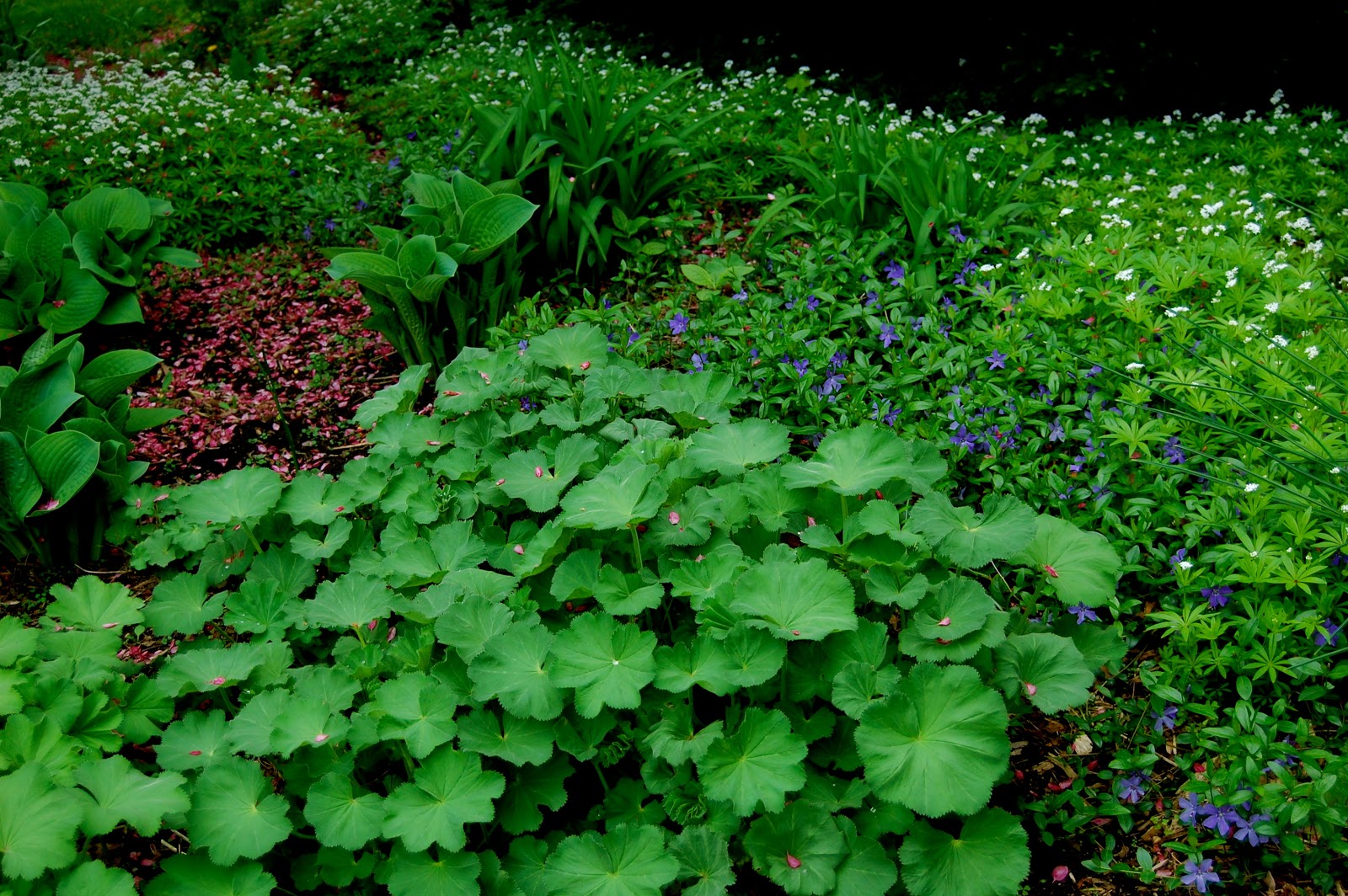
Ladies Mantle Alchemilla mollis is more chartreuse than yellow. Its flowers are quite insignificant but the plant grows into huge large mounds (2 - 2 1/2') with wonderful fuzzy cupped leaves that hold water droplets after a rain.


It blends will into foreground or background and makes plants beside it look fabulous.


If you have never tried either of these plants, please do. I hope you won't be disappointed. Both are very low maintenance and tolerated last summer's heat and drought very well.